The Concept
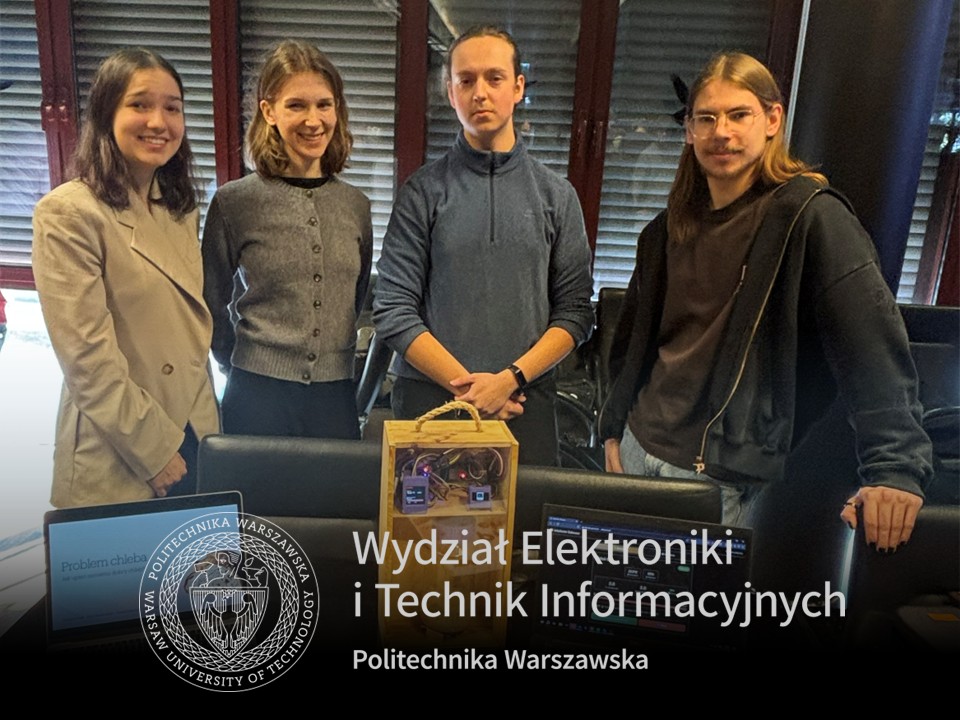
As part of our Computer Science studies, we were tasked with building a complete hardware-software solution for the "Team Project 1" (PZSP1) course. I had the privilege of being the Team Leader for our project: the Smart Sourdough Incubator.
Baking sourdough bread is an art, but maintaining the starter requires scientific precision. Fermentation is a complex biochemical process highly dependent on environmental conditions. Even slight temperature variations can disrupt yeast and lactic acid bacteria activity, leading to inconsistent results. Amateurs often rely entirely on intuition or guesswork. Our goal was to answer the question: "How can we simplify the control of sourdough fermentation for amateur bakers with an affordable, easy-to-use device?"
Hardware & Engineering
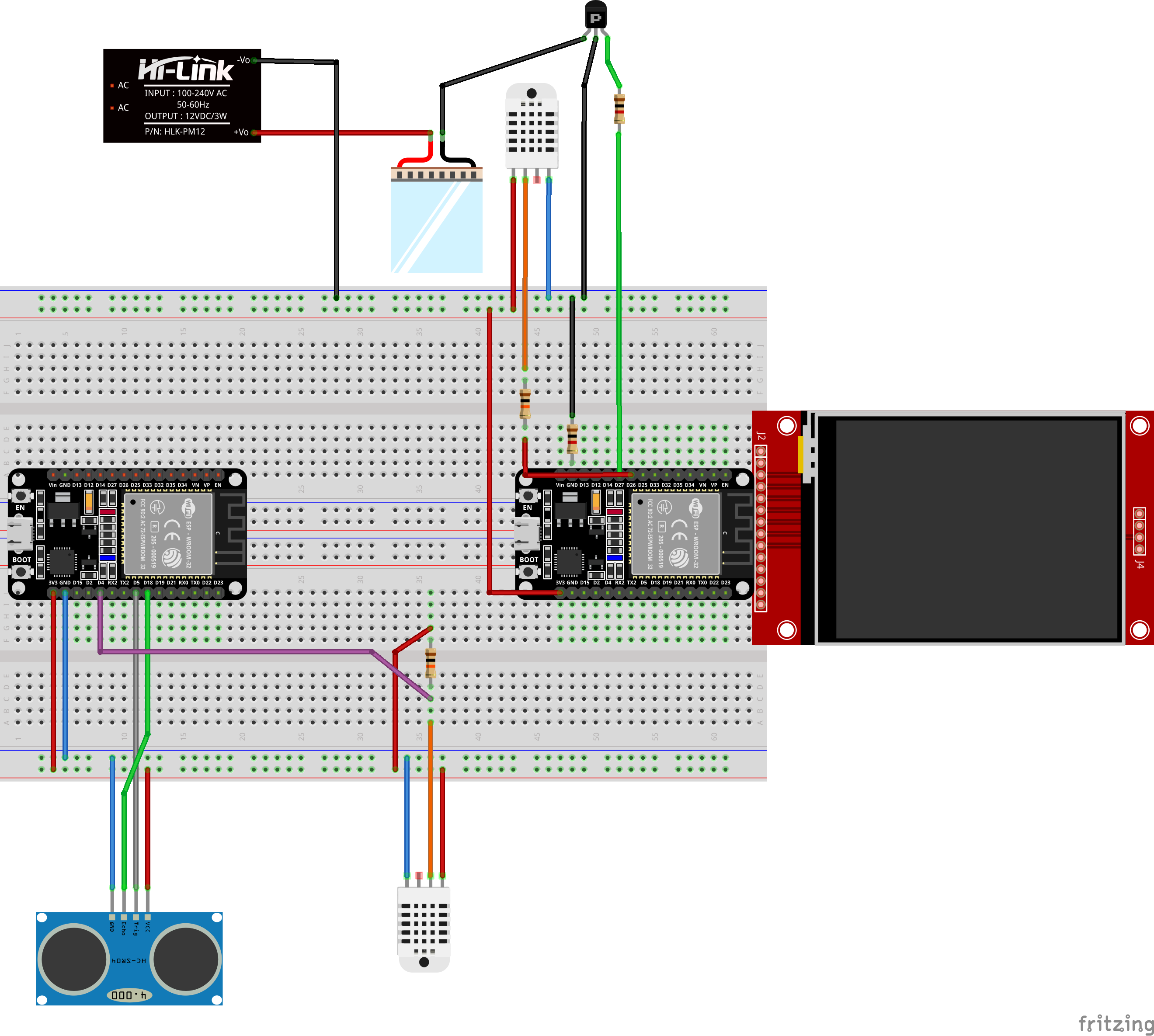
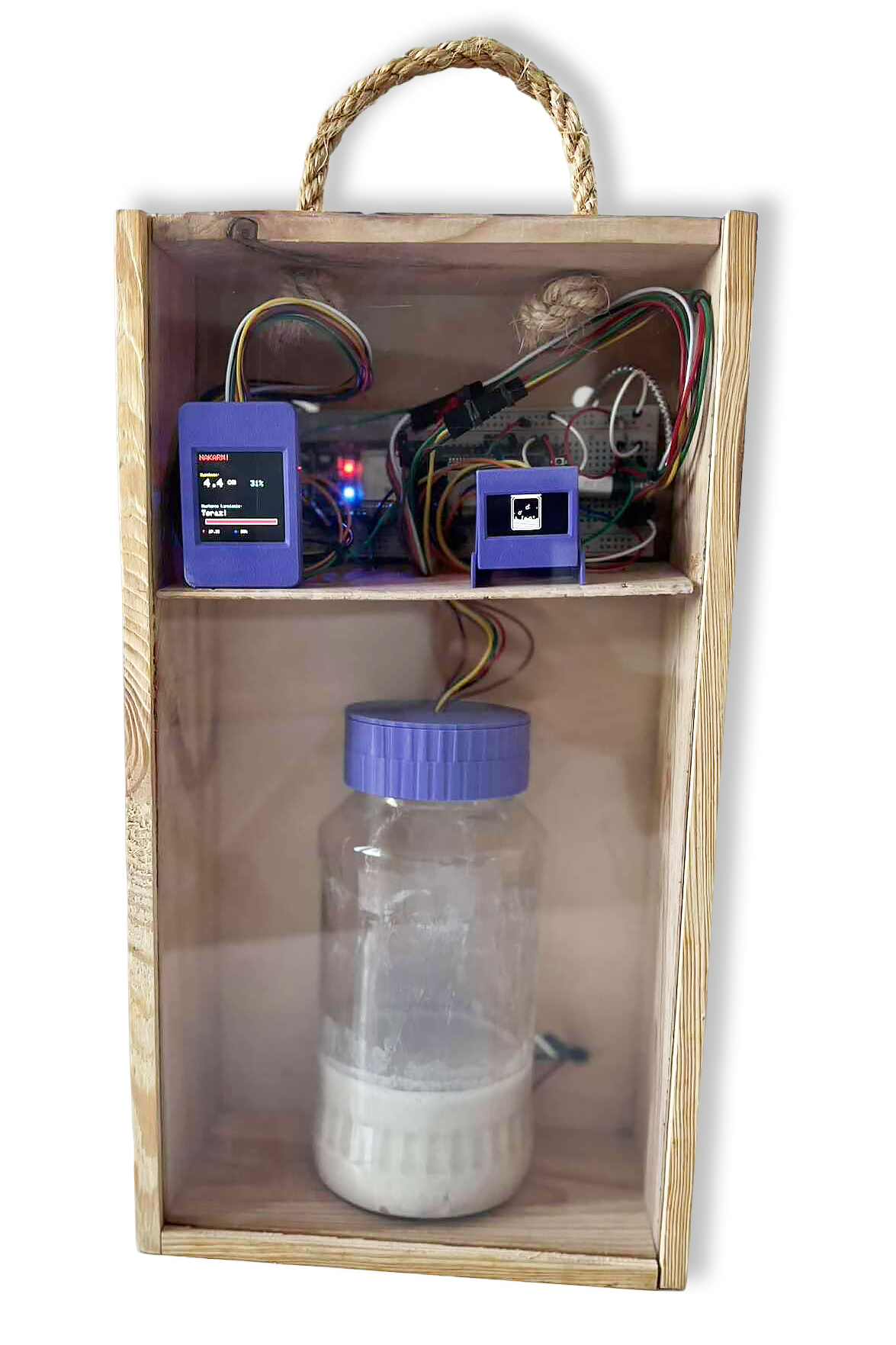
After rejecting concepts like a mobile app with reminders or a smart scale, we built a compact incubator encased in wood with a custom 3D-printed lid housing our sensory system. At the core is an ESP32 microcontroller. To maintain an ideal and controllable environment, we used:
- DHT11 Sensor: Tracks the current temperature and humidity inside the incubator.
- Peltier Module: A thermoelectric cooler/heater that precisely regulates the internal temperature, making the process independent of external room conditions.
- HC-SR04 Ultrasonic Sensor: Positioned at the top of the lid to constantly measure the distance to the dough. This calculates the dough's physical growth in real time without opening the lid.
- LCD Display & Buzzer: For local readouts and audio alarms.
Software Architecture & Web Interface
The firmware was written in C++ using PlatformIO. Our modular architecture ensured non-blocking concurrent operations. The ESP32 cyclically runs the PID loop for the Peltier cooler to normalize temperatures, reads sensor data, updates the LCD, and serves a web interface simultaneously.
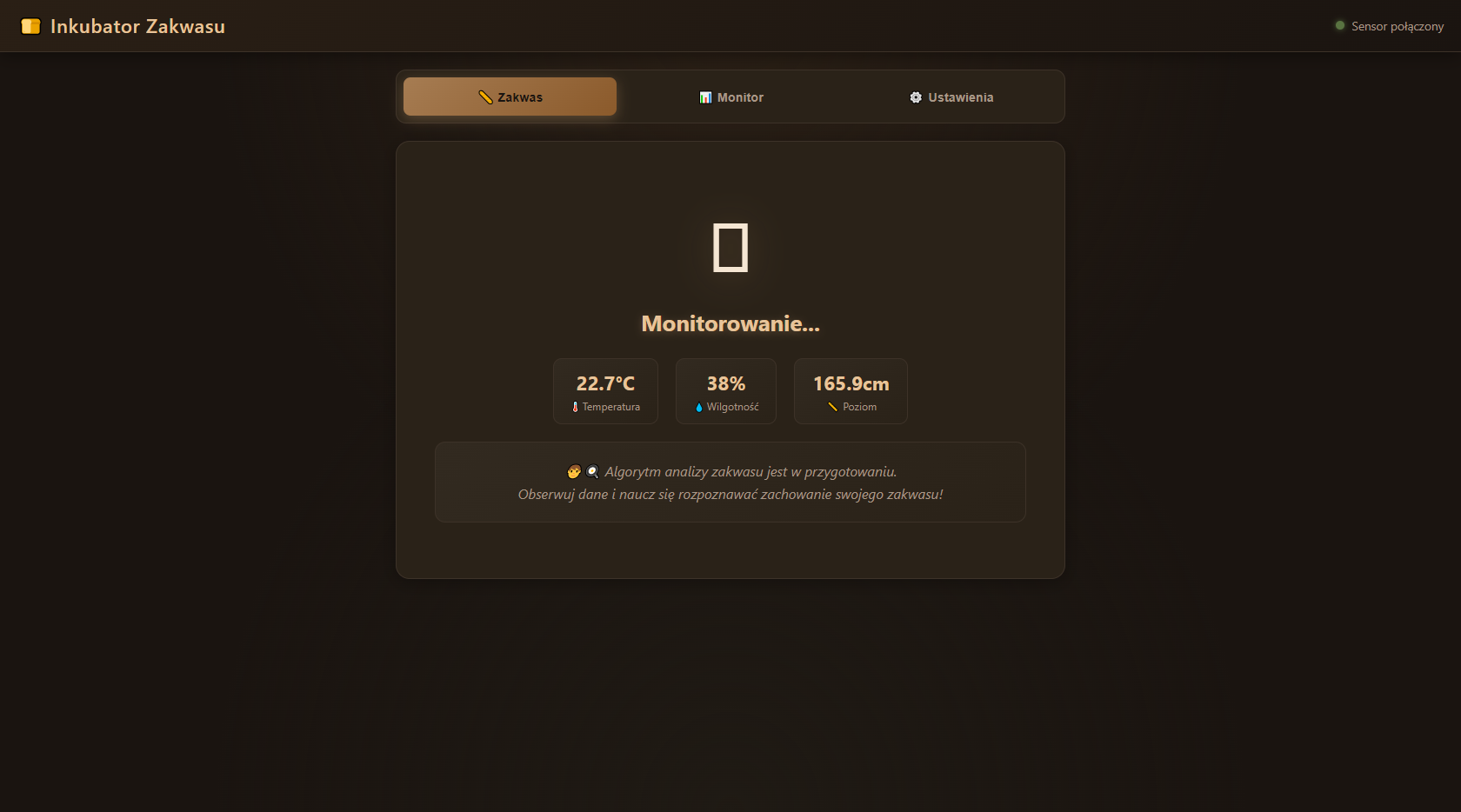
To avoid a constant external network tether, modules communicated effectively while hosting a local web server interface. Through it, the user can configure target temperatures, view current sensor readings, and establish precise thresholds for the dough's volumetric growth percentage.
Alerts and Notifications
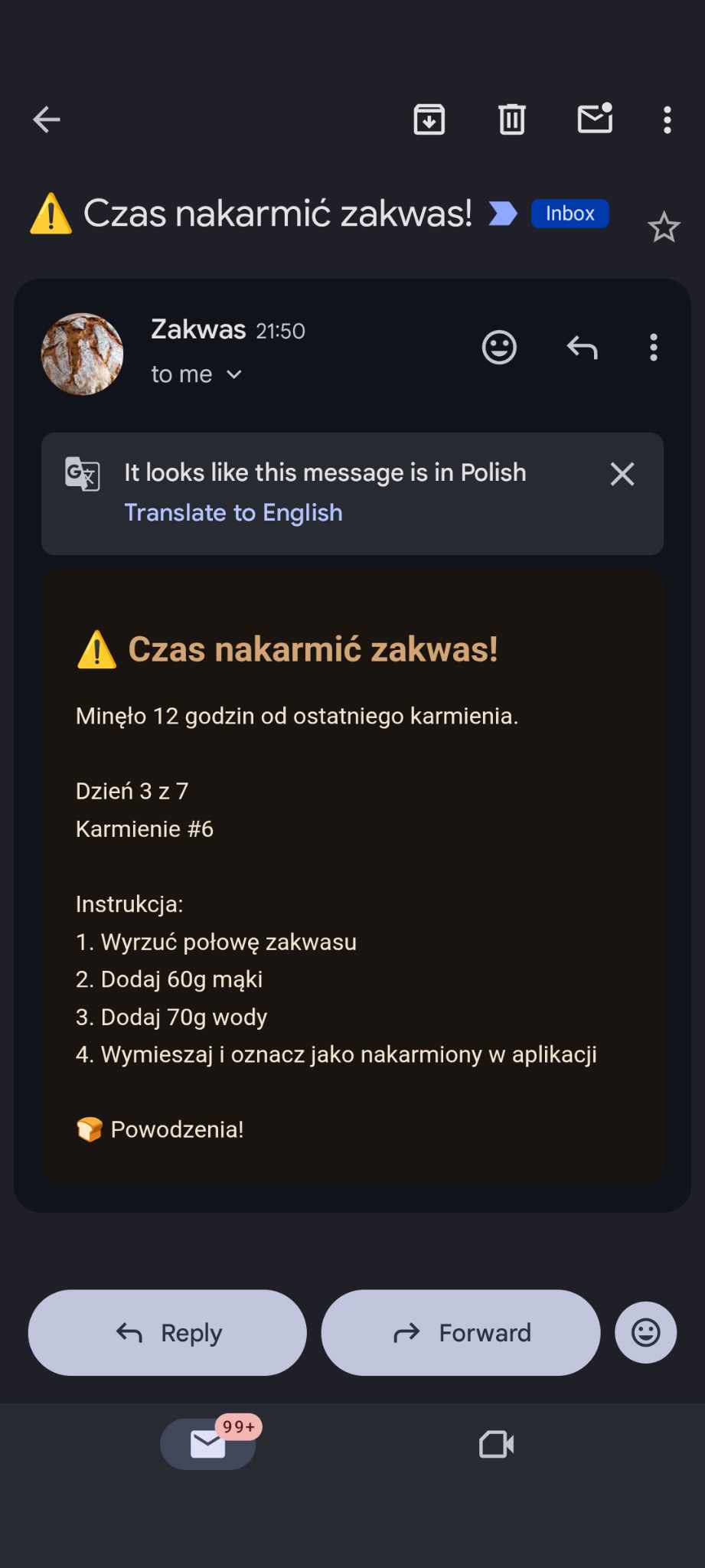
What good is an incubator if you still have to watch it constantly? Using the ultrasonic distance sensor, the system actively calculates the dough's volumetric expansion. Once the dough rises past the predetermined readiness threshold, the ESP32 triggers the buzzer and sends an automated Email Notification directly to the baker via the ESP-NOW communication protocol, ensuring they know exactly when the biological state of the starter is ready for baking.
Conclusion & Learnings
Leading this project was a tremendous learning experience. It required juggling hardware constraints, C++ firmware architecture, web technologies, and—most importantly—effective team communication and task delegation.
Winning the first place among all competing teams was the perfect conclusion to our hard work. For full technical details, diagrams, and code structure, you can read our complete project documentation (PDF).
Team Members & Credits
This project wouldn't have been possible without the amazing collaboration of my team. Special thanks to everyone involved:
- Izabela Bargieł
- Dawid Osipczuk
- Maja Muchowicz